Yueju Opera
Introduction
Yueju Opera, or Yue Opera, is one of the five major forms of Chinese opera and the second largest type nationally.
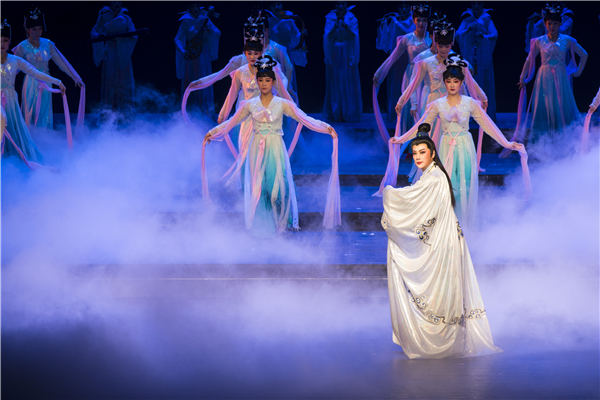
Known for its skillful narration and emotional depth, Yue Opera performances are characterized by beautiful singing, aesthetic elegance and graceful movements. Yueju Opera has at least 13 schools, with major themes revolving around wit and beauty. It is particularly popular in Shanghai, Zhejiang, Jiangsu, Fujian, Jiangxi and Anhui provinces, as well as in northern cities like Beijing and Tianjin.
Origin and Development
Yue Opera originated in the late 19th century in Shengzhou, Zhejiang province, as a form of public entertainment. At its inception, the performances drew from conversations between farmers, with librettos depicting vivid and relatable descriptions of daily life. The art form began to flourish when artists started integrating acting and musical accompaniment into their performances.
The name "Yueju Opera" was first used on a Shanghai newspaper during the 1920s. This era marked the rise of female performers, significantly contributing to Yueju Opera's popularity, especially in regions like Zhejiang, Jiangsu and Shanghai.
Costume and Makeup
In its early developmental stages, Yueju Opera costumes were simple, often comprising everyday clothing or borrowed formal attire from local shrines. However, professional costume design for Yueju Opera began in 1943, led by the stage and costume designer Han Yi. This marked a significant evolution in the opera's visual presentation, establishing a unique costume style characterized by the use of soft materials and bright colors, distinguishing it from other traditional Chinese operas.
Acclaimed Artists
Yuan Xuefen (1922-2011)
Yuan Xuefen was a noted performer in the Yueju genre of Chinese opera. Yuan is best known for playing the title role in the 1946 production of Wife of Xianglin (Xianglin sao), an adaptation of a work by the influential Chinese writer Lu Xun (1881-1936).
Fu Quanxiang (1922-2011)
Fu Quanxiang was celebrated for her bright and wide-ranging vocal abilities, particularly in coloratura soprano roles. She founded the “Fu School”, which emphasized the combination of true voice with falsetto, showcasing her talent in portraying tragic female characters. Notable performances include roles in "Butterfly Lovers" and "The Peacock Flies to Southeast".
Yin Guifang (1919-2000)
Known as the "Empress of Yueju Opera", Yin Guifang was renowned for her performances in Sheng roles (male characters). Her empathetic and deep performances, coupled with her distinct singing style, influenced many young actors. She was instrumental in popularizing and preserving the traditional elements of Yueju Opera.
Selected Yueju Opera Classics
Wife of Xianglin
"Wife of Xianglin" is an adaptation of Lu Xun's novel "Blessing". The opera tells the tragic story of a widow, Xianglin, who suffers immense personal loss and societal ostracization. Her character's journey through hardship and eventual demise highlights the opera's ability to convey deep emotional narratives.
Butterfly Lovers (Liang Shanbo and Zhu Yingtai)
This opera is based on an ancient folklore tale focusing on the tragic love story between Liang Shanbo and Zhu Yingtai. Known as the "Romeo and Juliet" of the East, the story explores themes of love, societal pressure, and sacrifice, culminating in the lovers' transformation into butterflies, symbolizing eternal union.
Modern Influence and Cultural Significance
Yueju Opera has maintained its significance in modern times, with performances continually evolving to incorporate contemporary themes while preserving traditional elements. The influence of Yueju Opera extends beyond China, captivating audiences worldwide with its unique blend of storytelling, music and aesthetics. Its ability to adapt and resonate with various audiences ensures its ongoing relevance and contribution to Chinese cultural heritage.
Yueju Opera has been recognized as a significant cultural art form both nationally and internationally. It has been performed across numerous cities in China, as well as on international stages, showcasing the rich cultural tapestry of Chinese opera. Performances like “A Dream of the Red Mansions” and others have received widespread acclaim, contributing to Yue Opera's enduring legacy.
Educational and Cultural Promotion
Efforts to promote Yueju Opera include integrating it into educational curricula and cultural exchanges, ensuring its preservation for future generations. Initiatives aimed at training new performers and increasing public engagement continue to foster appreciation and understanding of this traditional art form.








